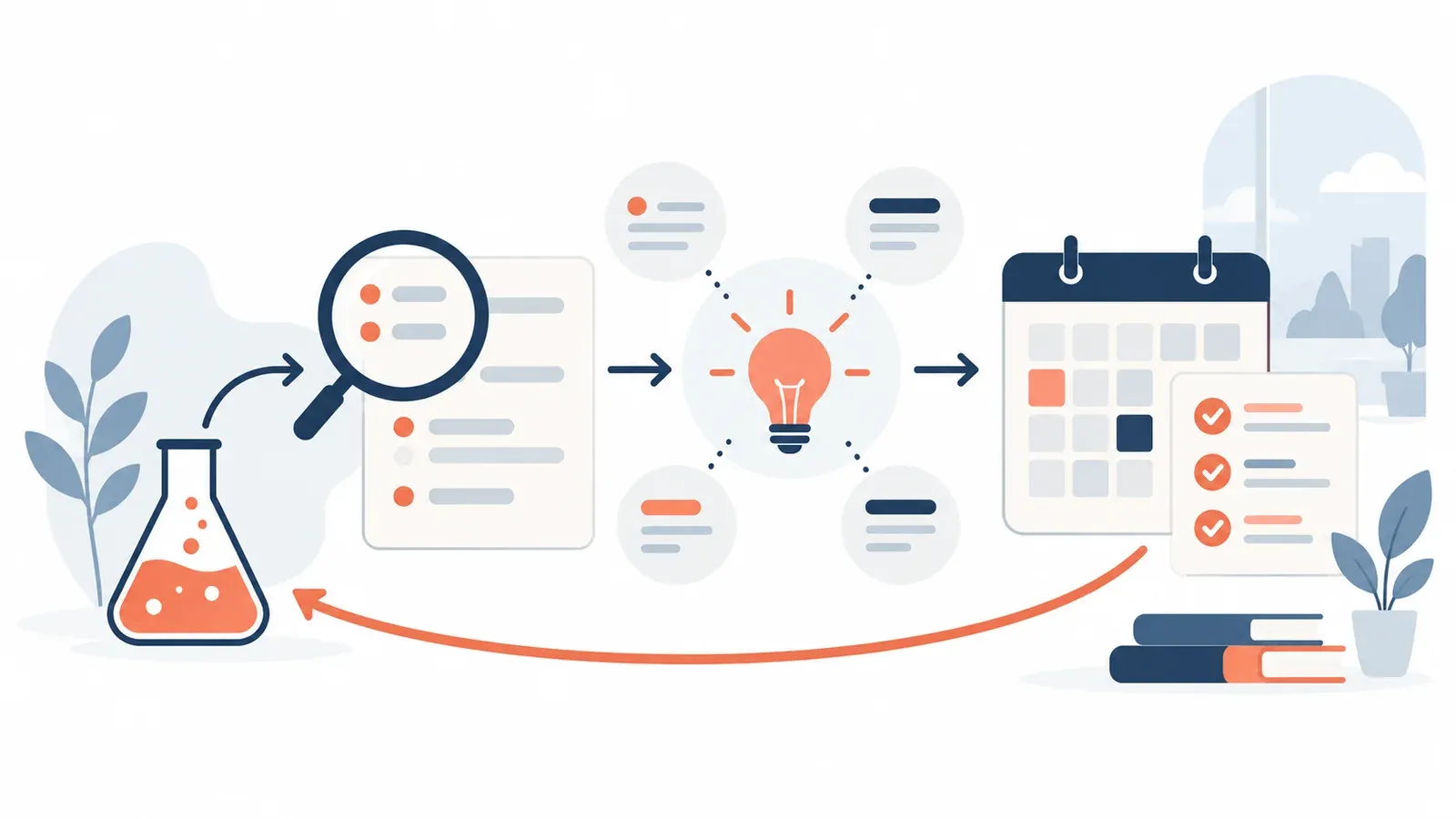
This guide helps you sort out what you noticed in your one-hour trial, then gives you a checklist of things to talk through with the teacher. It describes your experience. It does not score, rank or judge the teacher.
It is most useful within a day or two of the class, while the details are fresh.
What does the guide do?
It asks about three separate areas, because a class can go well in one and less well in another:
- Understanding: could you follow the explanation, try a similar question, and did the teacher look at your working?
- Communication: could you ask questions, did the pace and language suit you, and did the tools work?
- Next-step clarity: do you know what to practise, what the main gap is, and what options exist later?
For each statement you choose Yes, clearly, Partly, No, or Not observed / not sure. You can add a note in your own words for each area, and write your own questions, one per line.
How do I use it?
- Answer each statement in the three areas. Leave a statement as “not observed” if you cannot say. That is fine.
- Add a short note under any area where you want to record what happened, such as “explained ratio well but went fast on the last question”.
- Write your own questions for the teacher, one per line.
- Read the result. You see a count for each area, a list of questions, and a list of arrangements to agree directly.
- Download the checklist as a text file if you want it beside you when you message the teacher.
How do I read the result?
Each area shows a simple count, for example “2 clear, 1 partly, 0 not clear, 0 not observed”. If you observed nothing in an area, it says so plainly: this is unknown, not a negative view of the teacher.
The questions section picks up every “Partly” and “No” as a question worth raising, and every “not observed” as something still worth asking about. If everything was clear, the list stays short and you can still use your own questions.
The last section lists arrangements to settle directly with the teacher. These are whether you both want to continue and with what goal, lesson times and payment. They also include what happens if a lesson must be moved, and how progress will be checked. Lessons continue at the same rate as the trial, so the rate is already settled.
Example walk-through
Suppose a student answers as follows after a Mathematics trial.
| Statement | Answer |
|---|---|
| I could follow the explanation of my first sticking point. | Yes, clearly |
| I could attempt a similar question with the teacher’s help. | Partly |
| The teacher looked at my own working, not only the final answer. | Yes, clearly |
| I know what to practise before any next lesson. | Not observed / not sure |
The result shows the Understanding area as “2 clear, 1 partly, 0 not clear, 0 not observed”. In Next-step clarity nothing was observed (the other two items were also left as not observed), so the area reads as unknown rather than negative, and each item becomes a question to ask.
The questions list then includes “Could I try another similar question next time, to see if it holds?” and “What exactly should I practise, and how will I check it?”. The student now has two concrete things to say instead of “it was okay”.
Assumptions and limits
- The guide reflects only what you noticed in one hour. A single class is a small sample, so use it to ask better questions, not to reach a verdict.
- It does not score teachers and does not compare them.
- Nothing about refunds or ongoing inclusions is assumed. Only what you and the teacher agree directly applies.
- Your notes are saved on this device only.
Where to read more
The page on questions to discuss directly with the teacher after the trial explains each arrangement in more detail, and discussing continuation with the teacher walks through how that conversation can go. For what happens around the class itself, see after the paid trial class and the paid one-hour trial page.
This tool is one of several on the tools page. If the trial showed a gap you want help with, you can ask for another lesson in online one-to-one Mathematics tuition or your own subject.
The rate stays the same as the trial. Other subjects are in the subject directory.